Finding Family: How Peter's Heart Helps Children Rediscover Belonging
When people think about supporting vulnerable children, they often picture food programs, school fees, medical care, or safe housing. Those needs are real and urgent. But at Peter's Heart, there is another kind of restoration taking place—one that cannot be measured in meals served or uniforms purchased.
It is the work of helping children rediscover family and a sense of belonging.
Many of the children Peter's Heart serves live in the informal settlements surrounding Kampala, where poverty, overcrowding, and instability create enormous challenges for families. Some children are being raised by single mothers with little support. Others have absent fathers, fractured family relationships, or relatives they have never met. Over time, connections to grandparents, aunts, uncles, and cousins can be lost altogether.
Peter's Heart believes that whenever it is safe and appropriate, children thrive when they are surrounded by a broader network of people who know them, love them, and share responsibility for their well-being.
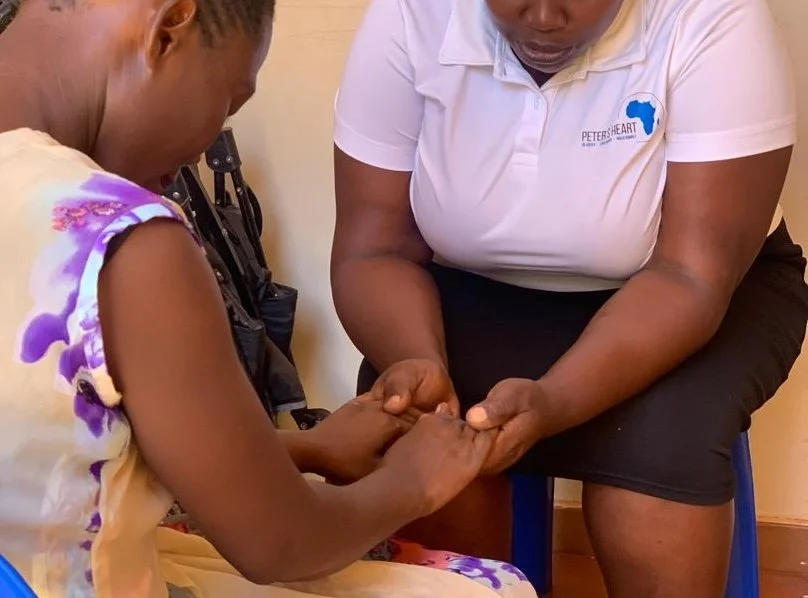
That belief has led the organization to invest in what staff members refer to as family background tracing—the careful work of identifying extended family members and exploring whether relationships can be restored.
Looking Beyond Immediate Needs
The process is rarely straightforward.
It often begins with conversations. Staff members gather information from mothers, children, neighbors, and anyone who may hold pieces of a family's story. They follow leads, visit communities, and sometimes travel considerable distances to locate maternal or paternal relatives. In certain situations, they work to confirm family relationships before taking the next steps.
Most importantly, Peter's Heart approaches this work thoughtfully and carefully. The goal is never reunification for its own sake. Instead, the team starts with a question:
Is there a safe, healthy way to expand this child's circle of care?
Sometimes, the answer is yes.
A Little Girl Finds Her Father's Family
One recent example involved a young girl whose father had abandoned the family due to substance abuse when she was still an infant. By the age of eight, she had no memory of his face.
Her mother, unemployed and struggling to provide for her two children, was doing everything she could to survive. Yet Peter's Heart staff recognized that beyond the family's immediate needs lay another possibility: perhaps there were relatives somewhere who could help these children understand where they came from and that they belonged to something larger than their circumstances.
Following conversations with a distant relative, the team traced connections to members of the children's paternal family living in the suburbs outside Kampala.
What they discovered brought hope.
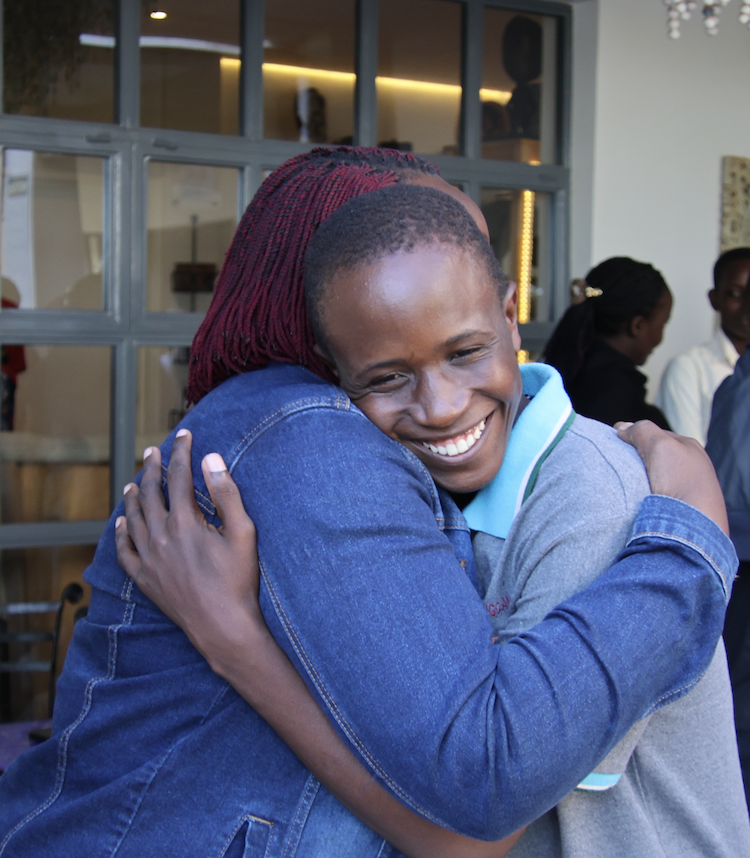
The relatives welcomed the opportunity to reconnect. Though they had limited means and were already caring for several children of their own, they expressed a desire to know the children and be involved in their lives. Plans were made for the children to attend family gatherings and spend time with relatives during school holidays.
For a little girl who had grown up without knowing that side of her family, the impact extended far beyond practical support. She was gaining relationships, identity, and a sense of belonging.
Why Family Connections Matter
Peter's Heart has seen that when children have access to healthy extended family relationships, the benefits can be profound.
Family members may provide practical support, such as helping with school expenses or welcoming children into their homes during school holidays. Children gain opportunities to experience different environments, healthy routines, and the stability that comes from being part of a wider family network.
Just as importantly, they gain something less tangible but equally valuable: the knowledge that they are not alone.
They begin to understand that they have grandparents who care about them, cousins who share their story, and relatives who will celebrate their milestones and encourage them through challenges.
These relationships help children answer some of life's most important questions:
Who are my people?
Where do I belong?
Expanding the Circle of Care
Family restoration is not simply about reconnecting children with relatives. It is also about strengthening the long-term support systems surrounding vulnerable families.
Peter's Heart recognizes that mothers and children should not have to rely exclusively on one organization to meet every need. By helping families reconnect with healthy relatives and extended family networks, the organization broadens the circle of people invested in a child's future.
Support becomes shared. Relationships deepen. Families become more resilient.
This approach reflects Peter's Heart's commitment not only to helping children survive today's challenges, but also to helping them flourish for years to come.
Another Child's Story of Hope
Staff members have shared the story of a young boy named Evra, who had taken on responsibilities no child should bear. Living in the slums, he became the primary provider for his household, searching local marketplaces for leftover food to bring home to his family.
Through Peter's Heart's efforts to locate extended relatives, Evra was connected with family members who welcomed him into their home. For the first time, he experienced the security of being cared for by adults who loved him and shared responsibility for his future.
Stories like Evra's remind us that family restoration is not merely about changing a child's surroundings.
It is about changing what a child believes is possible.
The Work of Belonging
Not every search results in reconnection. Not every situation is safe or appropriate. The work requires discernment, patience, and persistence.
But when restoration is possible, the results can be extraordinary.
At Peter's Heart, the mission has never been only to meet today's needs. It is to help children flourish within communities of care that can sustain them long into the future. That work involves many miles traveled, conversations held, doors opened, and sometimes closed.
Because every child deserves more than survival.
Every child deserves to know they belong.